
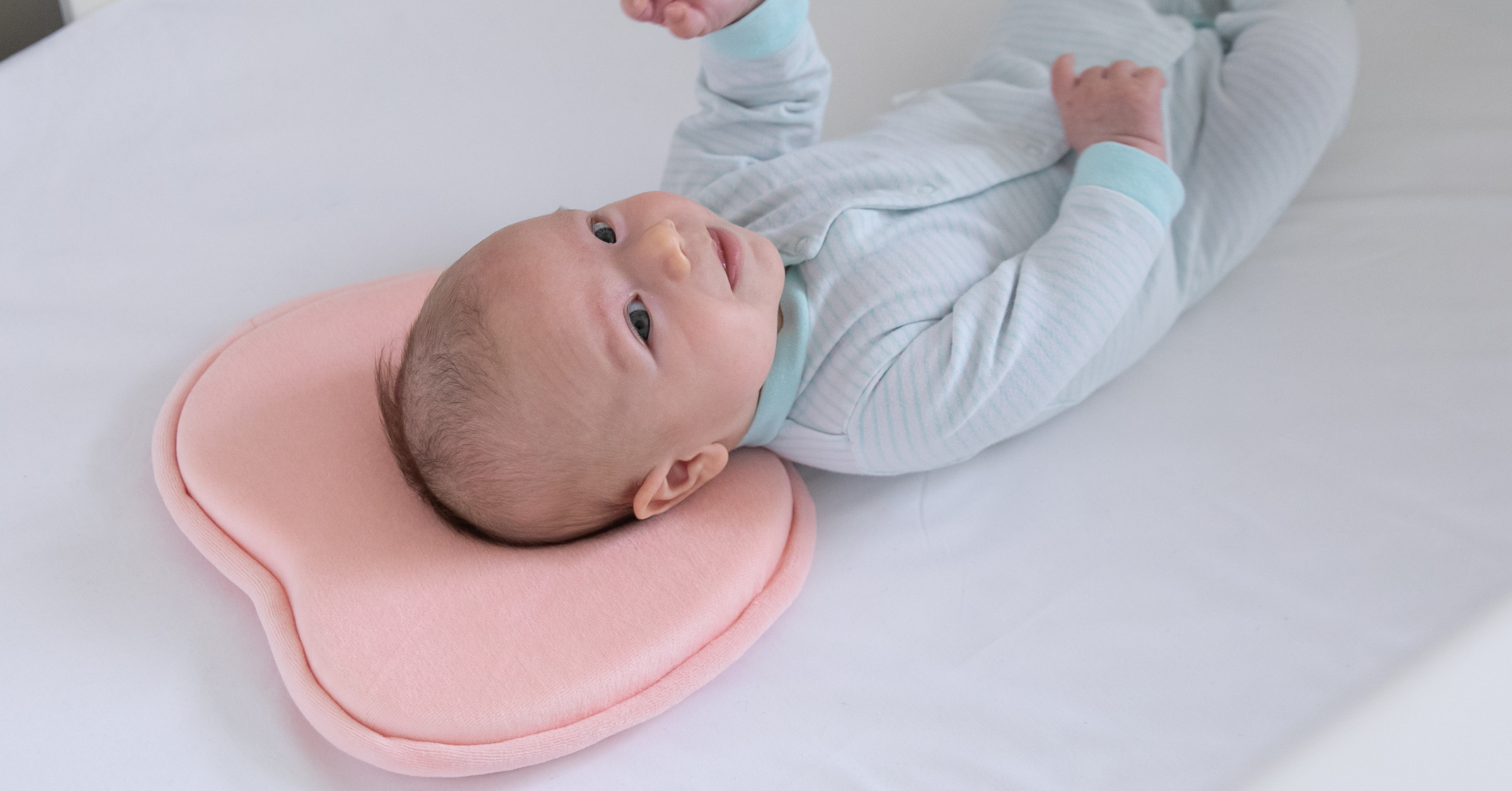
Some babies develop a flat or uneven area on their head from spending so much time lying on one spot. This is called positional head-flattening, or Plagiocephaly, sometimes known as flat head syndrome. It's common, and there's a lot you can do early on to help prevent it.
Why Do Babies Develop a Flat Spot?
A newborn's skull is still soft in the first few months. If your baby rests their head in the same position for long stretches, whether they're sleeping, in a car seat, or lying on a play mat, steady pressure on one spot can gradually change the shape of their head. Some babies are also born with a slight flat spot, or simply develop a favourite head position over time.
Does a Flat Spot Cause Any Harm?
There's no evidence that a flat spot affects your baby's development or health. It's mostly a cosmetic concern. Still, many parents would rather help prevent it early, since it's much easier to manage in the first few months than later on.
1. Change Your Baby's Sleep Position
A newborn will generally stay in whatever position you place them in for sleep, until they can move on their own. Try alternating which end of the cot they sleep at, or shift the cot's position in the room every so often. Babies like to look at things that interest them, like windows or a wall mural, so changing their view naturally encourages them to turn their head both ways.
2. Make the Most of Awake Time
When your baby is alert and supervised, give them plenty of face time and tummy time. From as early as one or two weeks, you can support your baby's head in your hands and gently encourage them to turn it each way while they follow your voice or eyes. Placing toys or rattles on different sides also encourages your baby to look both ways rather than favouring one.
3. Vary How You Carry Your Baby
Try not to let your baby lie down for long stretches during the day. Use a sling, hold them upright for cuddles, or carry them over your arm on their tummy or side. Mixing up how you hold them takes pressure off any one spot on their head.
4. Try a Head Shape Support Pillow
When your baby is lying on a flat surface, like their cot, bassinet, or the floor, a Baby Head Shape Support gently cradles their head and spreads pressure evenly, without lifting or restricting their movement.
Always place your baby on their back to sleep.
Frequently Asked Questions
Is a flat head dangerous, or will it affect my baby's development?
No. A flat spot is a cosmetic concern, not a medical one, and there's no evidence it affects development. That said, most parents prefer to prevent it where they can.
How long does it take to see improvement?
It varies from baby to baby. Since a newborn's skull is at its softest in the first few months, starting these habits early tends to make the biggest difference.
Can a flat spot fix itself without any treatment?
Often, yes, especially once your baby starts moving more on their own, like rolling and sitting up. Prevention in the early months just gives them a head start.
When should I see a doctor about my baby's head shape?
If the flat spot seems to be getting more pronounced, isn't improving with regular position changes, or you're simply not sure, it's always worth a chat with your GP or child health nurse.
Do head shape support pillows actually help?
Used alongside regular position changes and tummy time, a head shape support can help ease pressure on one area of the skull. It works best as part of a routine, not as a stand-alone fix.