If your child has ever run off without warning, you've probably asked yourself the same two questions. Am I watching closely enough? Is this actually safe?
Understanding why it happens changes what you do next.
Why Some Kids Just Take Off
For children with autism, wandering is often about moving toward something that's caught their interest, water, a train, a particular sound. Or it's about moving away from something that feels like too much, noise, bright lights, a crowd.
It's not defiance. It's not a discipline problem. It's just how some kids respond to their world.
This Isn't About Your Parenting
Wandering can happen with an adult standing right there. In your own home. In your own backyard. Somewhere you've been a hundred times before.
All of that is normal. Understanding why your child wanders helps far more than blaming yourself for not stopping it.
Where It Tends to Happen
Home, more than people expect, especially during a transition. Getting ready to leave. Coming back inside. A change in routine.
Outside the home, it's usually somewhere unfamiliar or crowded. Shopping centres. Airports. Car parks. Anywhere with a lot going on at once.
What Actually Helps
No single thing fixes this. A few things together make the real difference:
- Securing your home, gates, window and door locks, alarms on exits
- An ID bracelet, necklace, or tag with your contact details
- A tracking device for crowded outings
- Safety skills, taught gradually, through practice
- Looping in your school, neighbours, or local police
- A safety harness for outings, so your child stays close but can still walk and move
Why We Built the Moose Noose
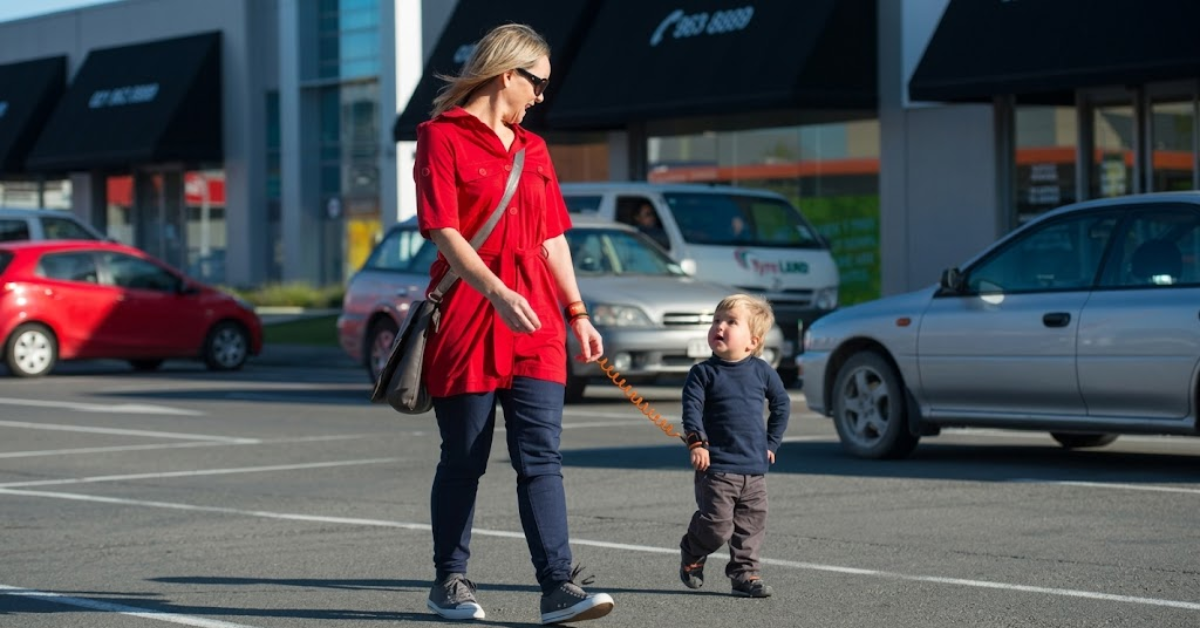
We built the Moose Noose for exactly the outings that feel highest-risk, a shopping centre, an airport, a car park. A steel-core coil that can't be cut through. A double-velcro wrist closure that takes two hands to undo. About a metre of stretch, enough for your child to walk beside you, not be dragged along.
It won't stop wandering on its own. It just buys you the thing you need most in those moments, time.
Can I Get Help Paying for One?
If your child already receives disability support, including for autism or ADHD, a safety harness can often be included alongside things like door alarms or tracking devices. Every plan's different, so check with your plan manager or your individual plan. If you'd like a hand putting together a quote, request one here and we'll help however we can.
You're doing more than you probably give yourself credit for.
Frequently Asked Questions
Why does my child with autism wander or run off?
Usually it's about moving toward something that's caught their interest, or away from something overwhelming, like noise or a crowd. It can also happen during a transition, moving from one place or activity to another. It's common, and it's not a behaviour problem.
Is wandering my fault as a parent?
No. It can happen under close supervision, in your own home, somewhere familiar. Understanding why it happens helps more than blaming yourself.
Where does wandering usually happen?
More often at home than people expect, especially during transitions. Outside the home, it's usually somewhere unfamiliar or crowded.
Is a safety harness a good option for a child who wanders?
Yes, as one part of a bigger plan. It won't stop wandering by itself, but it keeps your child safely close for the outings that carry the most risk.
Can a toddler harness be funded through NDIS?
If your child already receives disability support, including for autism or ADHD, it can often be included. Check with your plan manager or your individual plan to confirm, and we're happy to help you put a quote together.