Bedwetting doesn't only happen to children. The Australian Department of Health says about two in every 100 teenagers and young adults wet the bed at night, and Continence NZ puts it at about one in 100 adults. The medical name is nocturnal enuresis, and it can be treated.
This guide covers the treatments health professionals recommend, how a bedwetting alarm works for adults, and what to expect in the first weeks.
How do you stop wetting the bed as an adult? Start with a check-up with your GP or a continence nurse to rule out things like a bladder infection or constipation. The main treatments are a bedwetting alarm, medicine prescribed by your doctor, or both together. An alarm trains your brain to wake up when your bladder needs emptying, and it usually takes 12 to 16 weeks to work fully.
Why adults wet the bed
According to the Australian Department of Health, bedwetting in teenagers and young adults comes from a mix of three things:
- The body makes a lot of urine overnight
- The bladder holds only a small amount of urine at night
- It's hard to fully wake up from sleep
Bedwetting can also run in families. Continence NZ adds that a urine infection or an overactive bladder can sometimes be involved, and that stress can start the problem, with wet nights carrying on after the stress has passed.
Step 1: Talk to a health professional
The Department of Health advises talking to a health professional with training in bladder problems. That could be your GP, a continence nurse advisor or a continence physiotherapist. They can check for anything that needs treating first, such as constipation or a bladder infection, and help you choose the right treatment.
For free, confidential advice, call the National Continence Helpline on 1800 33 00 66 (8am to 8pm AEST, Monday to Friday). They can also tell you about continence services near you.
If you've started wetting the bed again after a long time dry, read our guide to sudden bedwetting as well.
How to stop wetting the bed as an adult
These are the treatment options listed by the Department of Health, Continence NZ and a 2018 medical review of adult bedwetting in the Canadian Urological Association Journal.
A bedwetting alarm
A bedwetting alarm goes off the moment you start to wet. Over time, your brain learns to wake you before wetting starts, or to hold on until morning. The Department of Health lists alarms as a treatment for teenagers and young adults, and Continence NZ lists them for adults. Continence NZ notes that an alarm works best with support from a continence advisor.
Medicine from your doctor
Your doctor may prescribe medicine that reduces how much urine your body makes overnight, such as desmopressin, or medicine that helps your bladder hold more. Continence NZ says medication can often control bedwetting. The Department of Health notes that an alarm and medicine can be used together.
Treating anything that adds to it
Constipation and bladder infections can make bedwetting worse. Treating them is part of the plan your health professional will put together.
Changes to your evening routine
The 2018 review lists lifestyle changes alongside medicine as a treatment option. Your health professional can tell you which changes suit you, for example around when and what you drink in the evening.
Do bedwetting alarms work for adults?
Yes. A bedwetting alarm works the same way at any age. It wakes you at the first sign of wetness, so you can get up and finish on the toilet. Each time this happens, your brain gets better at responding to a full bladder in your sleep.
Bladder & Bowel UK gives this guidance for teenagers and young adults using an alarm:
- Look for early signs in the first 4 weeks. You start waking to the alarm, the wet patches get smaller, or the alarm goes off later in the night.
- Expect 12 to 16 weeks for the alarm to work fully.
- Keep going until you've had 28 dry nights in a row.
- Get out of bed before you turn the alarm off. Then go to the toilet, even if you feel empty, change into dry underwear and go back to bed.
If you don't see any early signs after 4 weeks, talk to your health professional about other options, such as medicine.
The Rodger Wireless Bedwetting Alarm in adult sizes
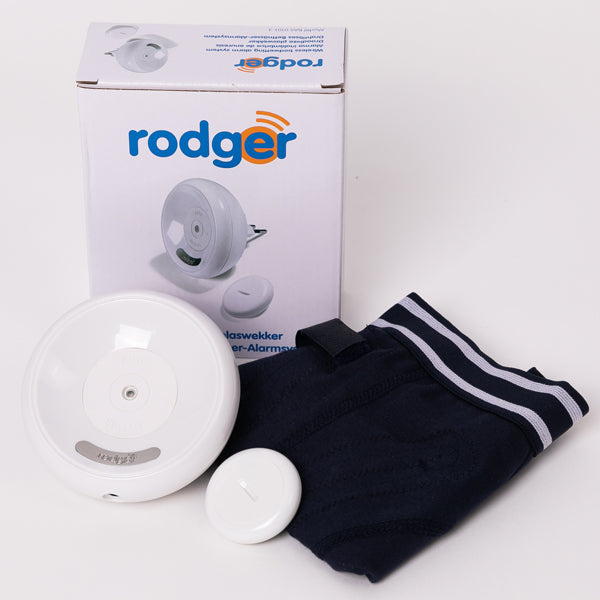
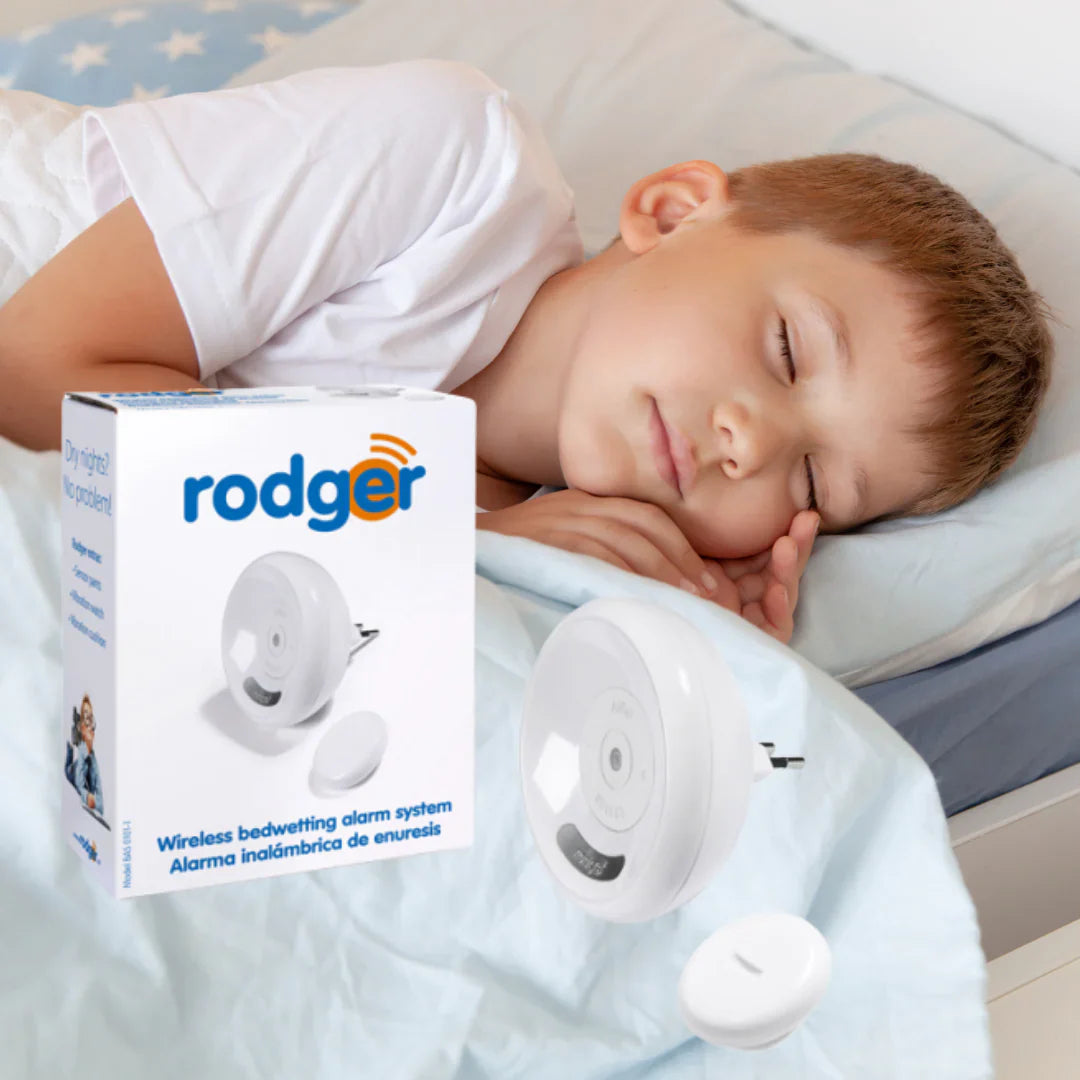
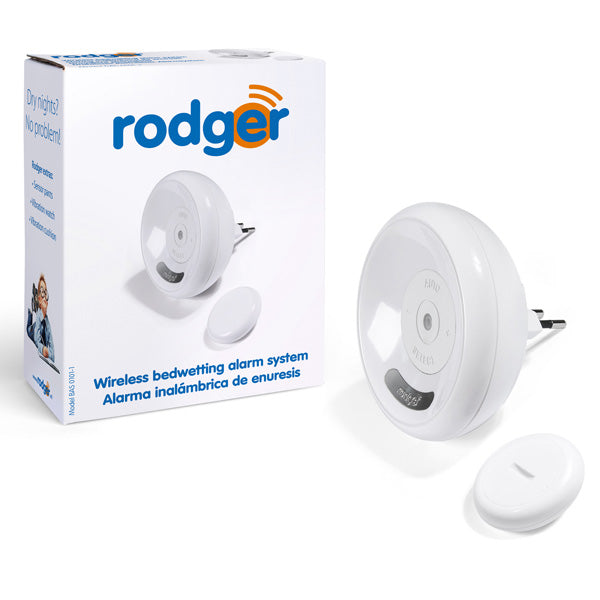
Many people don't know the Rodger Wireless Bedwetting Alarm comes in adult sizes. We've helped many teens and adults reach dry nights with it.
- The sensor is sewn into the briefs. There's no clip, cord or bed mat, and the alarm sounds at the first drop.
- It's fully wireless. A small transmitter snaps onto the briefs and sends a signal to the alarm unit by your bed.
- It's built for deep sleepers. The alarm has 8 tones up to 80 dB. You can add the Bed-Shaker, which vibrates under the mattress.
- It comes in three teen and adult sizes: Young Adult (68 to 73 cm waist), Adult Medium (81 to 86 cm waist) and Adult Large (91 to 96 cm waist). Spare sensor briefs are sold separately.
- It's a registered medical device. Rodger is made in Europe, has been sold since 2003 and is registered as a medical device under the EU MDR.
- It's private. The alarm unit sits beside your bed, so you can use it in your own room without anyone else knowing.
See the Rodger Wireless Bedwetting Alarm and adult sizes
Waking up wet after dreaming about the toilet
Some adults dream they're on the toilet and wake up wet. This fits one of the three causes the Department of Health describes: finding it hard to fully wake from sleep, so the bladder's signal doesn't wake you. A bedwetting alarm is designed for exactly this, because it gives your brain a strong signal at the moment wetting starts.
Can adult bedwetting stop for good?
For many people, yes. Bladder & Bowel UK says most people who become dry with an alarm stay dry. If wetting comes back, using the alarm again for another period is often enough. Continence NZ says medication can also provide a long-term solution for some people.
Funding: NDIS and CAPS
If you're an NDIS participant, a bedwetting alarm may be covered under the consumables category of your plan. The Rodger alarm is NDIS eligible, and we can send an invoice to you or your plan manager. The Continence Aids Payment Scheme (CAPS) is a separate Australian Government scheme for eligible people. Ask your GP or continence nurse whether it applies to you.
Frequently asked questions
Is it normal to wet the bed as an adult?
It's more common than most people think. The Australian Department of Health says about two in every 100 teenagers and young adults wet the bed at night. Continence NZ estimates about one in 100 adults. It's a recognised medical condition called nocturnal enuresis, and it can be treated.
Do bedwetting alarms work for adults?
Yes. Bedwetting alarms are a recognised treatment for teenagers and adults. The alarm wakes you at the first sign of wetness, and over time your brain learns to respond to a full bladder while you sleep. Continence NZ notes that an alarm works best with support from a continence advisor.
How long does a bedwetting alarm take to work for adults?
Bladder & Bowel UK says alarms usually take 12 to 16 weeks to work fully, with early signs in the first 4 weeks. Keep using the alarm until you've had 28 dry nights in a row.
Who should I see about adult bedwetting in Australia?
Start with your GP, a continence nurse advisor or a continence physiotherapist. You can also call the National Continence Helpline on 1800 33 00 66 for free advice and help finding a local continence service.
Is there a bedwetting alarm made for adults?
Yes. The Rodger Wireless Bedwetting Alarm comes with sensor briefs in Young Adult, Adult Medium and Adult Large sizes. The sensor is sewn into the briefs, so there's no clip or cord, and the alarm unit sits beside your bed. It's NDIS eligible and delivered Australia-wide from Moosebaby.
Can adult bedwetting be cured permanently?
For many people it can. Bladder & Bowel UK says most people who become dry with an alarm stay dry, and if wetting returns, another round with the alarm is often enough. Talk to your health professional about the right plan for you.
Sources
- Australian Government Department of Health, Bedwetting in teenagers and young adults
- Continence NZ, Adults and bedwetting
- Bladder & Bowel UK, Using an alarm to treat bedwetting: teenagers
- Akhavizadegan H, Locke JA, Stothers L, Kavanagh A. A comprehensive review of adult enuresis. Canadian Urological Association Journal, 2018.
This guide is general information, not medical advice. Talk to your GP or a continence professional about your situation.